Kimchi Is Food, So Why Is Kimjang Intangible Cultural Heritage?
How did seasoning napa cabbage become heritage recognized worldwide? From preparations that begin in spring to sharing kimchi with neighbors and changing traditions, join the jumak hostess to explore the story.
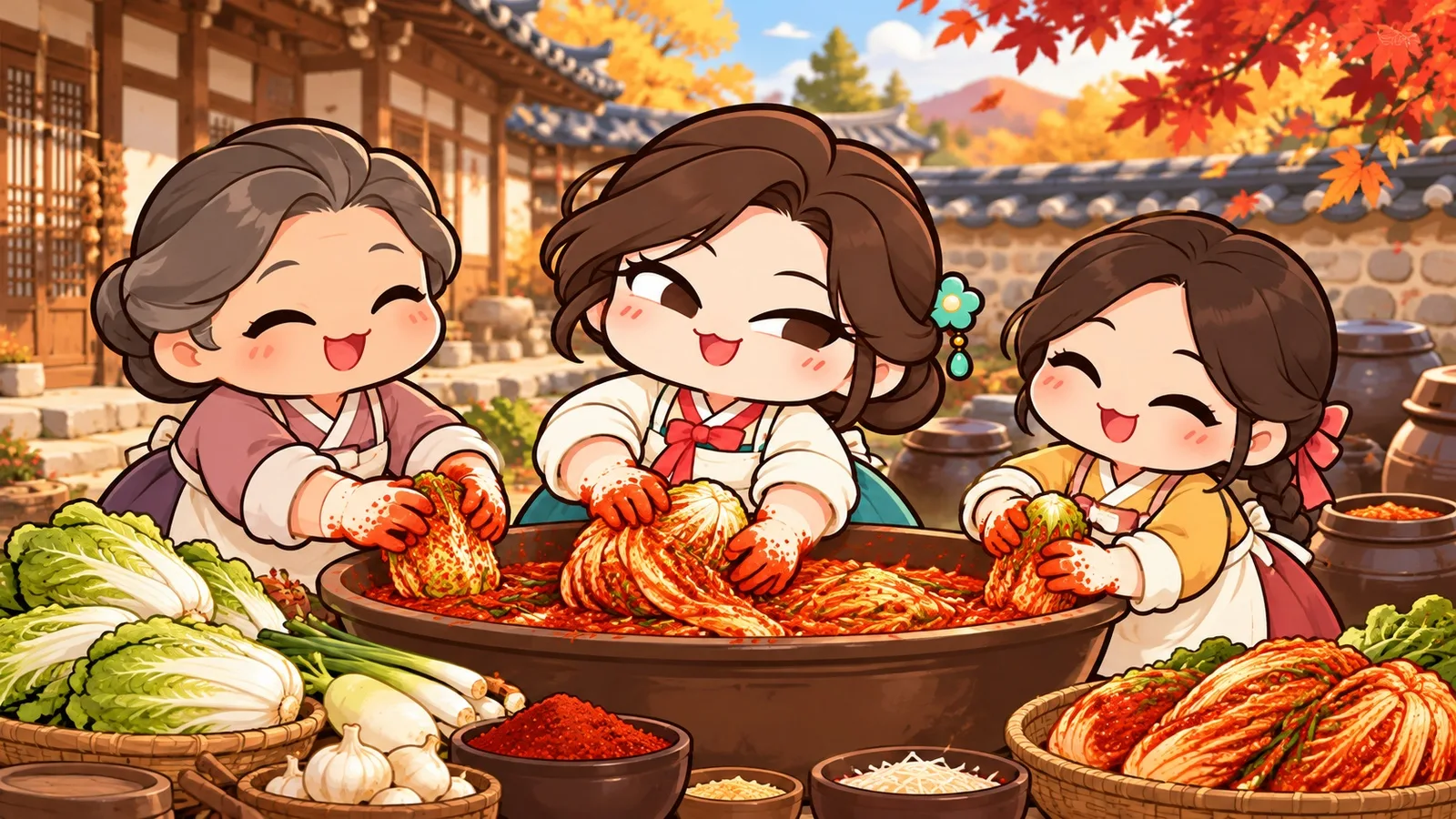
Picture a yard on a chilly late-autumn day. Someone carries cabbages while someone else mixes seasoning. Laughter rises around large basins, and portions of freshly made kimchi are set aside for the neighbors. The jumak hostess points to the scene and asks: how did the simple act of seasoning cabbage become world heritage?
Kimjang happens in late autumn, but preparation starts in spring
It's easy to think of kimjang as a single busy day, but preparations begin much earlier. UNESCO explains that in spring, people prepare salted seafood using shrimp and anchovies; in summer, they prepare salt; and in late summer, they dry and grind red peppers. Only when everyone gathers in late autumn does a year's preparation across the seasons come together as kimchi.
Choosing a date for kimjang once involved more than circling a day on the calendar. Each household considered the weather and temperature to find a suitable time. Vegetables had to be preserved for the long winter, so kimjang was not just about making a tasty side dish; it was a practical skill for preparing for the season ahead.
That is why kimjang required many helping hands as well as ingredients. Some prepared cabbages, others filled the leaves, and others readied storage jars. Sharing a task that would be overwhelming alone made kimjang a natural family and neighborhood occasion.
What the world recognized was not a single plate of kimchi
In 2013, UNESCO added 'Kimjang, making and sharing kimchi in the Republic of Korea' to its Representative List of the Intangible Cultural Heritage of Humanity. The key words are 'making and sharing.' UNESCO was not rewarding one recipe or variety of kimchi; it recognized the value of a cultural practice in which people prepare food together, share it, and pass the custom from one generation to the next.
Kimjang has never been just a contest to see who mixes the best seasoning. Giving freshly made kimchi to relatives and neighbors and learning one another's methods are part of the custom. UNESCO highlighted how these activities strengthen family cooperation, community ties, and a sense of belonging. Even the journey of a container of kimchi from one household to another is part of the heritage story.
Different seasonings in every home, with memories in every batch
Even with the same cabbage, kimchi tastes different depending on who makes it. Ingredients and methods vary by region and by what people learn in their families. UNESCO also notes these differences and explains how kimjang skills have been handed down through generations.
For some people, kimjang brings back memories of gloves covered in red seasoning. For others, it is the cold air on the day they carried cabbages. When people say, 'This is how we make it at home,' kimjang becomes a story wider than a fixed recipe. Along with techniques, memories of the people who worked together are preserved.
Because of this diversity, it is difficult to declare a single seasoning ratio the one 'authentic' way to make kimjang. The coexistence of regional and family methods is itself an important part of the tradition. Just as the jumak hostess serves different side dishes to suit her guests, every household has its own kimjang table.
Even after pre-salted cabbages and kimchi refrigerators
Kimjang has not stood still in time. In 2018, Korea.net described families who began buying pre-salted cabbage or storing kimchi in dedicated refrigerators as household sizes and lifestyles changed. Some reduced the steps that once took days or made only as much as they needed.
Does that mean easier kimjang has drifted away from tradition? Not necessarily. The same article described people enjoying freshly made kimchi with boiled pork and oysters after finishing the work. Tools and storage methods may change, but the pleasure of sharing a table afterward remains.
If someone hands you a container of kimchi this autumn, perhaps it holds more than cabbage and seasoning. It also carries the time spent watching the weather, the hands that worked together, and the share reserved for a neighbor. Maybe the question to ask at kimjang is no longer just 'What makes the tastiest kimchi?' but 'Who would I like to make it with and share it with this year?'
Comment