Why Korean Winters Are Warm from the Floor Up: The Ondol Way of Life
How did a fire in the kitchen heat the room's floor? Join the jumak hostess to explore hidden flues beneath stone floors, the kindness of the warmest spot, and ondol's evolution into modern apartments.
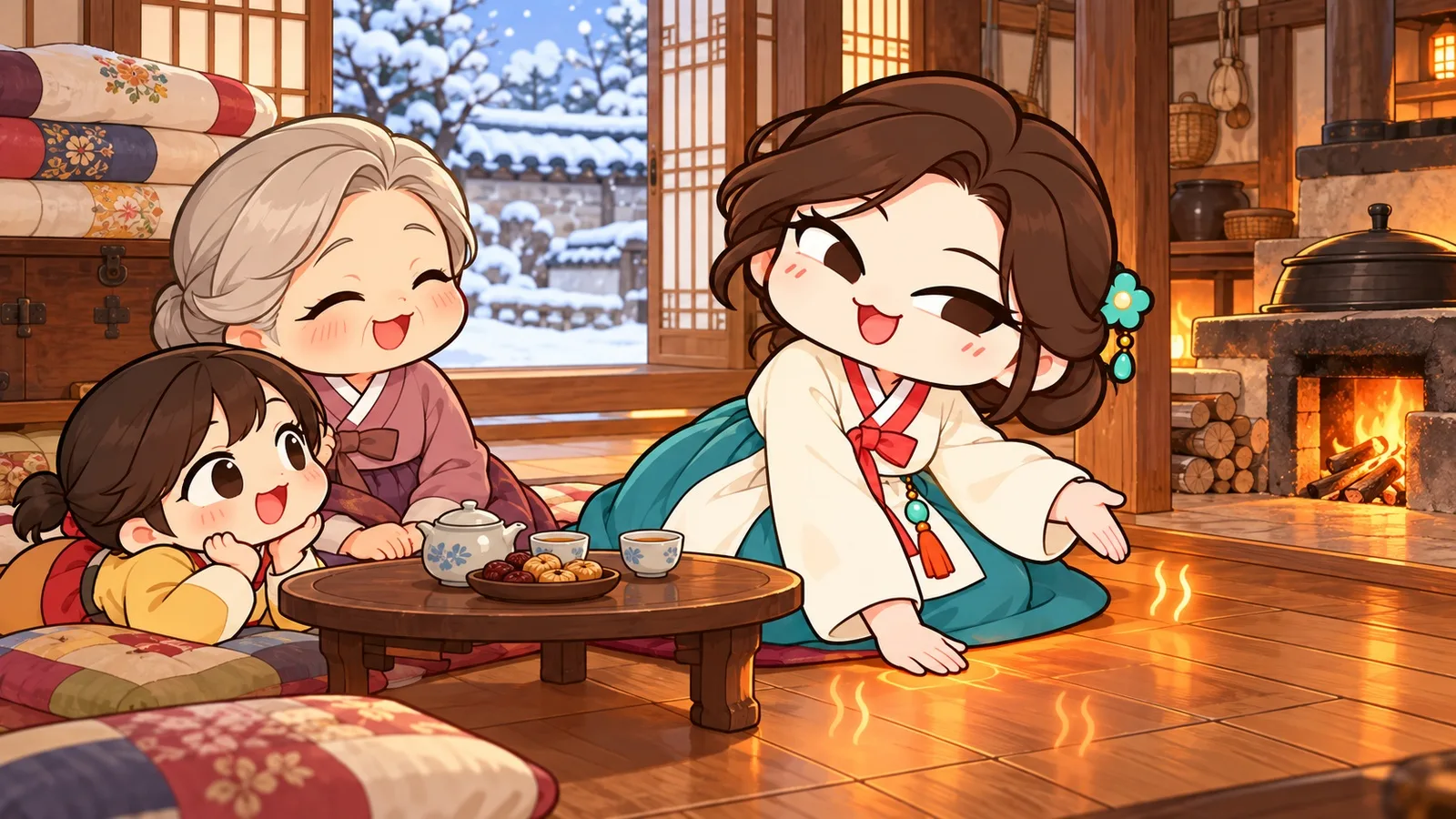
Imagine entering a traditional Korean house on a chilly day. The wind outside is cold, but once you take off your shoes, the warm floor welcomes your feet. As you settle into a cozy spot, the jumak hostess offers you a bowl of soup. But isn't it curious? In a traditional hanok, the fire was lit near the kitchen rather than inside the room. How, then, did the floor become warm?
Why was the room warm when the fire burned in the kitchen?
The secret lay in passages hidden beneath the floor. In a traditional gudeul heating system, a fire burned in the agungi firebox, and its heat and smoke flowed through channels called gorae beneath the room. Broad flat stones called gudeuljang were laid above them. When the fire heated the stones, warmth spread across the floor, while smoke traveled through the channels to the chimney.
This meant the floor could stay warm without a bonfire inside the room. The beauty of the design is that the firebox, heat channels, and smoke outlet have distinct roles. Using the kitchen firebox could also allow people to cook food and heat a room at the same time.
Once warmed, stone and earth retain heat. That is why the floor could remain warm for a while after the fire died down. As the hostess might say, 'The fire's out, but the seat is still warm.' Of course, how long the heat lasted depended on the structure of the house and how much the fire was stoked.
Ondol did not warm the entire room from the beginning
Early forms of ondol were not like the heating systems found in today's apartments. At first, some homes used partial heating channels, a form known as jjokgudeul. Archaeological evidence of such floor-heating facilities goes back to the early Iron Age. Ondol was not an invention completed overnight by one person, but a practical technology refined over a long period.
Full-floor ondol became widespread much later. The Academy of Korean Studies explains that the fully heated floor system was completed in the late Goryeo period and spread widely through the Joseon era. Its form varied by region and household circumstances. It would be inaccurate to assume that every old Korean house had an identical ondol system.
People carefully adjusted the number and direction of the flues, the thickness of the stones, and the positions of the firebox and chimney to distribute heat evenly. Designing unseen passages beneath a floor was part of the skill of surviving winter comfortably. Even a single ondol room held generations of experience.
A warm floor changed habits inside the home
As the floor became the center of home life, people sat on it to eat, read, and sleep. Low furnishings, such as portable dining tables and cushions, became natural choices instead of tall chairs. An ondol room was not simply somewhere to warm the body; it was also a place where family members gathered face to face.
The araetmok, the warmer part of the floor close to the firebox, played a special role in winter. People remember offering this warm spot to elders or guests and setting a bowl of rice there to keep it from cooling. A heating structure thus became part of household courtesy and care for others.
The Korean custom of taking off shoes indoors is also connected to this floor-centered way of living. Of course, no single custom can be explained entirely by ondol alone. Still, the habit of sitting or lying on the floor has long gone hand in hand with keeping the home's interior clean.
The firebox changed, but ondol survived
Over time, both ondol's heat source and its mechanics changed. Traditional houses heated flat stones with flames from a firebox; modern homes and apartments commonly circulate boiler-heated water through pipes beneath the floor. The firebox and stone flues have disappeared from view, but the idea of warming the home from the floor up remains.
Even more remarkable is that ondol is more than an old heating technique. Ondol culture was designated a National Intangible Heritage on April 30, 2018. This does not mean it was inscribed as World Heritage; it means Korea recognized the value of a way of life and a body of techniques passed down together.
When we sit cross-legged on a warm floor on a cold day, perhaps we are living the next chapter of an old technology. The flues that once carried flames may be gone, but the warmth that brought people together remains. This winter, when someone says, 'Come, sit in the warmest spot,' remember the years of history behind those words.
Comment