Why Did Emperor Gojong Establish the Red Cross on October 27, 121 Years Ago?
The Korean Red Cross began with Imperial Edict No. 47, proclaimed by Emperor Gojong in 1905. Through records and photographs, trace its 121-year history: forced dissolution under Japanese domination, revival under the Provisional Government, and rebuilding in 1949.
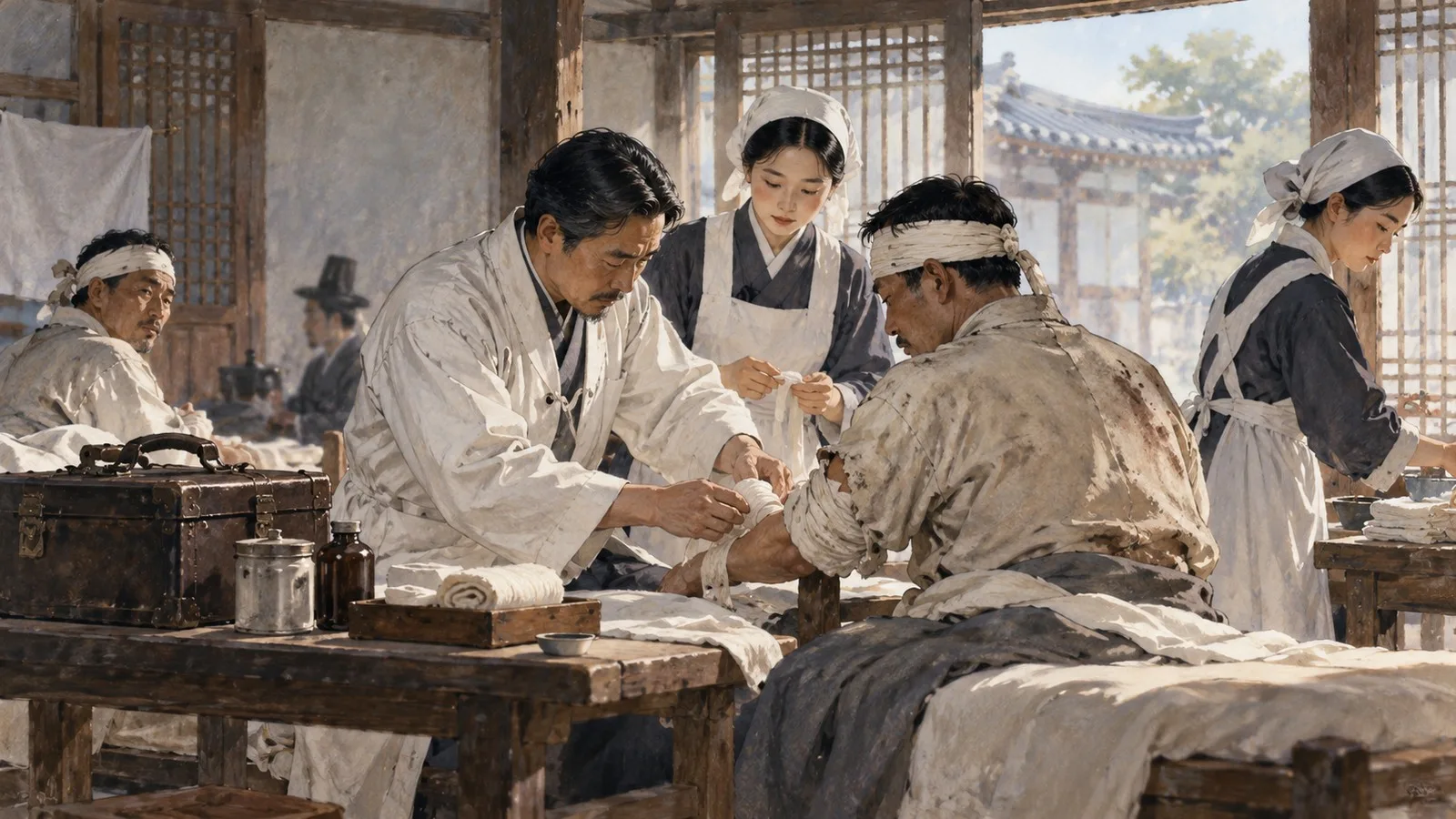
Every October 27, many of us think of the Korean Red Cross and its work in blood donation and disaster relief. But did you know this organization began with an imperial edict issued by Emperor Gojong 121 years ago? Looking back at its history reveals both a commitment to saving lives and the Korean Empire's struggle to defend its endangered sovereignty.
A choice in 1905, when the nation was in turmoil
On January 8, 1903, the Korean Empire joined the Geneva Convention on protecting the wounded in war. Continuing its effort to participate in the international Red Cross movement, Gojong promulgated Imperial Edict No. 47, the Regulations of the Korean Red Cross, on October 27, 1905. The Korean Red Cross officially commemorates this as its founding date.
Why did Gojong seek to create an international humanitarian organization to help the war-wounded? According to the Korean Red Cross's official history, he intended both to provide relief to the sick and wounded and to demonstrate internationally that the Korean Empire was an independent sovereign state. At its birth, humanitarian concern for life stood alongside efforts to safeguard the nation's independence.
Its first mission was saving lives
The new organization was not merely a name. A Red Cross hospital had been set up before the organization was formally established, and medical care for the sick and injured had begun. The rules enacted by Edict No. 47 also covered assisting impoverished patients and injured people and giving relief to those hurt by disasters or accidents. From the beginning, the Red Cross sought to care not only for soldiers wounded in battle but also for ordinary people suffering in daily life.
A name erased after four years, and reborn in Shanghai
The Korean Red Cross's first chapter did not last long. Following the coercive Eulsa Treaty of November 1905, Japanese interference intensified. On July 23, 1909, the organization was abolished under Imperial Edict No. 67 and forcibly absorbed into the Japanese Red Cross. Even an independent humanitarian body could not escape the loss of national sovereignty.
After the March First Movement and the establishment of the Provisional Government of the Republic of Korea in 1919, the Korean Red Cross Society was reorganized in Shanghai. During the provisional-government period, it supported independence fighters and overseas Koreans and trained personnel to treat the wounded. Its work also carried the significance of presenting Korea to the world as an independent nation.
A photograph of the Korean Red Cross Society's emergency relief team from 1920, preserved by the Korean Red Cross, shows people alongside members dressed in white nursing uniforms. Though it does not depict the founding ceremony of 1905, it offers a real historical glimpse of people trying to save lives during the Provisional Government period.
Another October 27: a new start in 1949
After liberation, efforts began to rebuild the Red Cross movement. On April 30, 1949, the Korean Red Cross Organization Act was promulgated; on October 27 that year, a founding ceremony was held. The date of this new beginning matched October 27, when the original regulations were issued in 1905. The Red Cross went on to work in refugee relief during the Korean War and in many other disaster and medical settings.
What should we remember after 121 years?
The Korean Red Cross's history is more than an organization's chronology. In 1905, people tried to protect both the nation's independence and human lives; in 1919, humanitarian work continued in support of the Provisional Government and fellow Koreans; and in 1949, the foundations for that work were rebuilt in a new nation. When we lend a hand to someone in need today, perhaps we are connected to that long history.
Comment